
Stories from our CoP: Gbankulso Amir Abdallah Aidas
In this edition of Stories from our Community of Practice (CoP), we spotlight Gbankulso Amir Abdallah Aidas, winner of Through the Agroecology Lens photo contest. Amir is a visual storyteller and photographer with 14 years of experience in documenting stories across diverse landscapes. His work is driven by a passion for uncovering powerful narratives that reside in long-standing traditions and ancestral wisdom.
Q&A

Amir, congratulations on your win! How does it feel to come in first place, and what was your main motivation for participating in the 'Through the Agroecology Lens' contest?
Winning this contest is a profound honor, but to me, it feels less like a personal victory and more like a long-overdue validation of the story I have spent 14 years trying to tell. As a storyteller, you invest a lot of time looking for 'the' shot the one that does not just capture a moment, but an entire philosophy. Seeing this image recognized tells me that the world is finally ready to look at indigenous wisdom not as a 'primitive' relic of the past, but as a sophisticated blueprint for our future.
My main motivation for participating was to challenge the dominant narrative of modern agriculture. We are often told that food security requires high-tech labs, 'improved' corporate seeds, and energy-heavy storage. Yet, in Tanchara (Ghana), I witnessed a community that has achieved total self-sufficiency using nothing but ancestral knowledge and the spirit of sharing.
To start us off, could you tell us a bit about yourself? Your background and what first drew you to storytelling and photography?
I was born in the Savannah region of Ghana in the late 90s. Growing up in the early 2000s and being exposed to a camera, I soon found myself naturally taking photographs of my environment in the rural community where I was born.After photographing several indigenous knowledge systems in my community, I realized there was a clear disconnect with what I was exposed to as an agriculture student. In school, the focus was solely on modern knowledge using large tractors and heavy machinery for farming. However, the evidence from my community was quite the contrary; people were achieving healthy, productive farming without any of those external tools.I inevitably became an advocate through the one medium I know best: photography. I use it to document and show how much modern knowledge can benefit if we infuse it with traditional wisdom. After over 14 years navigating the world with this concept, I now consider myself a storyteller first and a photographer second.
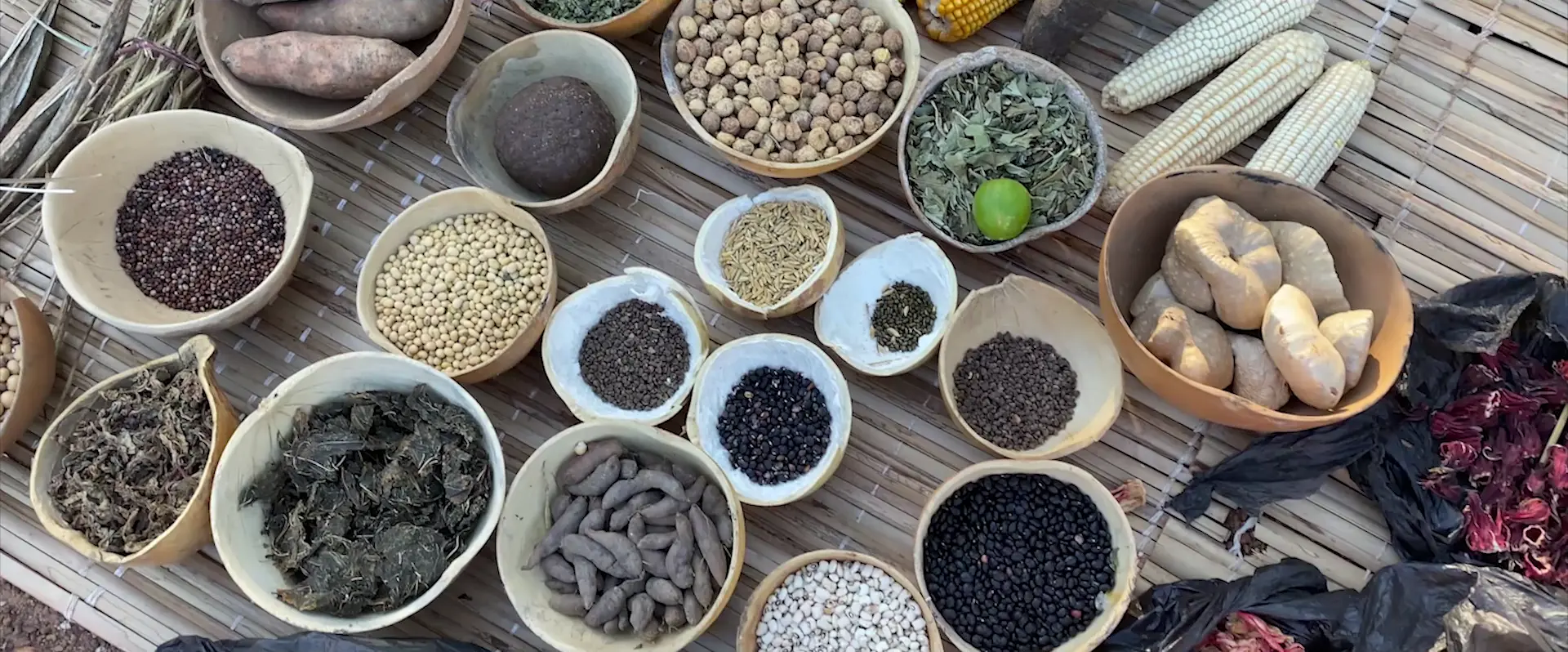
Your winning photograph captures a profound moment. Can you take us back to that day, what were you seeing and feeling as you documented the women seed keepers of Tanchara?
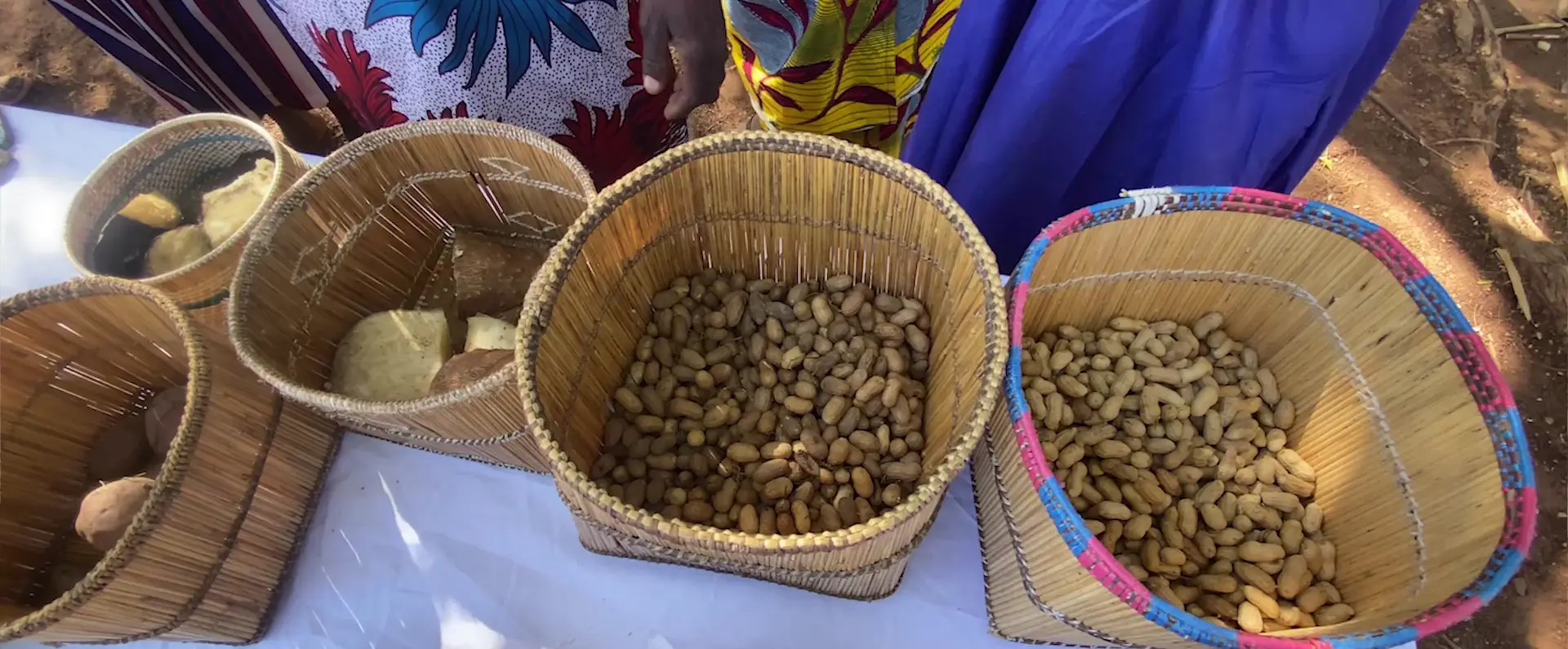
That day was the culmination of a journey I embarked on as a firm believer in agroecology. I had been invited by CIKOD (Center for Indigenous Knowledge and Organizational Development) to participate in documenting the traditional agricultural knowledge they have been championing in Tanchara.The moment I arrived, I was struck by a sense of awe. I was not just looking at a farming community; I was looking at a living library. As a storyteller, I was amazed by the technical mastery these women displayed storing and reproducing seeds for generations using purely indigenous techniques. It defied everything the 'modern' world says is necessary for food security.
When the women began to gather and spread that vast variety of seeds across the white canvas, the visual impact was electric. Against the stark white background, those seeds: the 'gold' of Tanchara stood out in brilliant detail. At that exact moment, my appetite to capture the scene became incredibly intense. It was a moment of pure, unadulterated ancestral power, and I wanted my lens to do it justice.
Your description of seeds as a “thousand-year-old ancestral archive” is a powerful entry point into this discussion. What drew you to tell this particular story, and why is this narrative so critical to agroecology?
What drew me to this story was the stark contrast between the evidence of my eyes and the lessons in my textbooks. Having studied agriculture, I was taught that efficiency only comes through mechanization and external inputs. But in Tanchara, I saw a 'technology' that was far more sophisticated because it was biological and social. I was drawn to the idea that these seeds are not just biological material; they are a recorded history of survival, adaptation, and community care. Each seed in that 'archive' has survived droughts, floods, and pests for centuries because of the wisdom of the women who kept them.This narrative is absolutely critical to agroecology for three main reasons.
One, for breaking dependency. Agroecology is about autonomy. When a community loses its indigenous seeds, it loses its independence. By telling the story of the Tanchara women, I am showing that seed sovereignty is the first step toward a fair rural economy. If you own the seed, you own your future.
The second reason is about climate resilience without external energy. We are currently in a global race to find climate solutions. This story is critical because it proves that resilience does not always need a high-tech, high-energy fix. These seeds are already 'programmed' by nature and tradition to withstand local climate shocks.
And lastly, the human element. Too often, agriculture is discussed as a series of chemical or mechanical transactions. This story puts the human-seed connection back at the center. Through the work of CIKOD, I saw how traditional knowledge creates a social safety net. Sharing seeds isn't just about farming; it's about fostering a spirit of community that protects everyone.
I told this story because I believe the world needs to see that we aren't 'developing' these communities they are actually the ones holding the blueprints for a sustainable planet. We just need to be humble enough to look through the lens and learn from them.
You highlight the “quiet, fierce resilience” of the Tanchara women. Especially as we commemorate the International Year of the Woman Farmer, what did you learn from them about the vital link between seed sovereignty and community strength?
Commemorating the International Year of the Woman Farmer while reflecting on Tanchara is deeply moving for me. What I learned from these women is that seed sovereignty is not just a technical agricultural practice; it is the soul of community strength. In Tanchara, the women are the primary custodians of the seeds. They are the ones who decide which varieties to save, how to store them, and most importantly, how to share them. This power, the power to decide what the community eats and plants next season, is the ultimate form of independence. I learned that when a woman holds the seeds, she holds the security of her entire household and, by extension, the village.
The link between seed sovereignty and community strength became clear to me through two main observations. In the modern economy, we are taught to compete. In the women’s seed-sharing network of Tanchara, I saw a system where the strength of the group is prioritized over the profit of the individual. By sharing these indigenous seeds freely, they ensure that no family is left behind. This 'spirit of the gift' creates a social bond that is far stronger than any commercial contract. The second observation is on the Power of Autonomy. Because these women have mastered preservation techniques without needing external energy or costly inputs, the community is shielded from global market fluctuations. They do not have to worry about the rising price of imported seeds or the availability of chemical fertilizers. Their strength comes from their autonomy.These women taught me that a community is only as strong as its ability to sustain itself. By protecting their ancestral seeds, they are protecting their culture, their health, and their freedom. To celebrate the woman farmer is to celebrate this specific brand of resilience one that prioritizes life and legacy over external dependency. They are not just farming; they are ensuring the survival of a civilization.
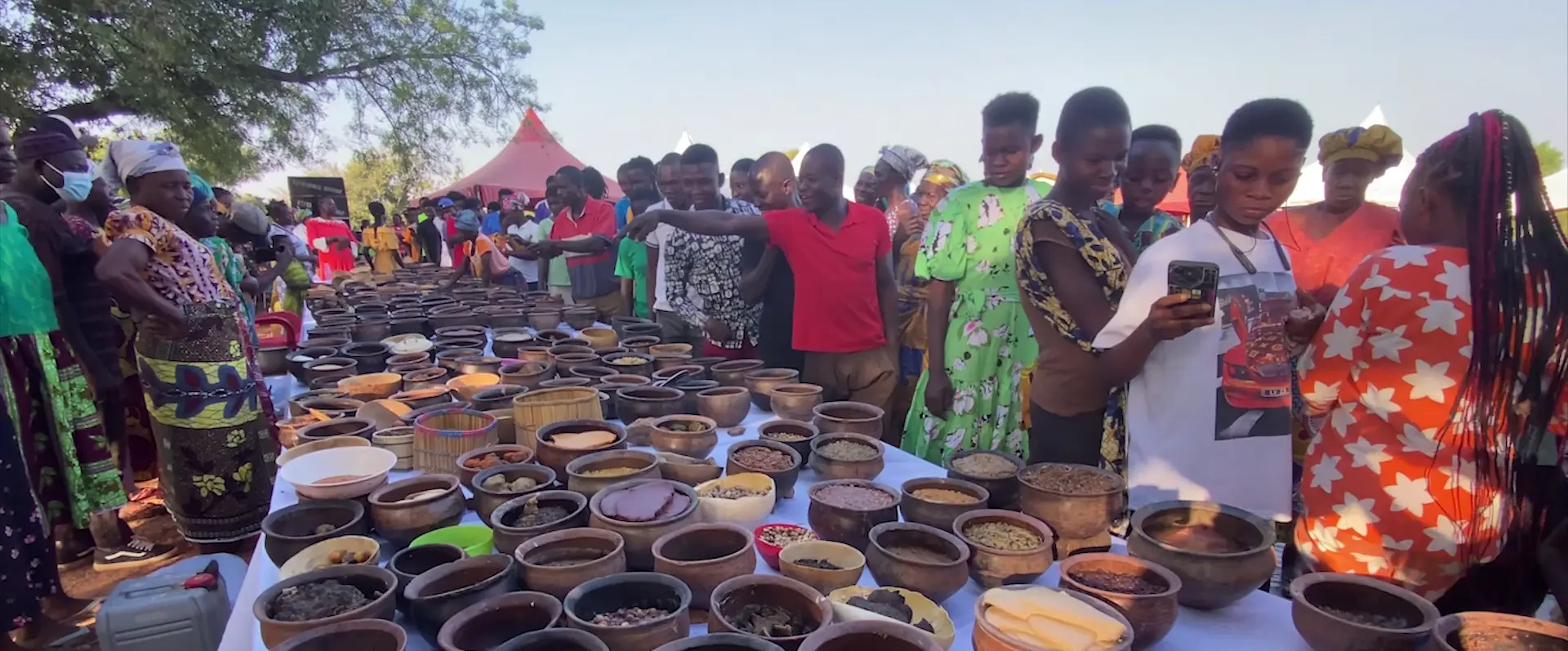
How does your work challenge or reframe dominant narratives around agroecology and what you have reffered to as seed colonization?
For too long, the dominant narrative has framed agroecology as a 'return to the past' or a lack of progress. My work seeks to completely flip that script. Through my lens, I show that agroecology is actually the most advanced form of agriculture we have because it is the only one that is truly sustainable without destroying the planet or bankrupting the farmer.
When I speak about 'seed colonization’, I am referring to the systemic way indigenous farmers are being pressured to abandon their ancestral seeds in favor of patented, commercial varieties. This creates a dangerous 'lock-in' where farmers must buy new seeds and expensive chemicals every single year.
My 14 years of storytelling have taught me that the best way to fight a false narrative is to show a more beautiful, functional truth. I want people to look at my photos and realize that 'modern' doesn't always mean 'better,' and that the most resilient future is the one we have actually had in our hands all along.
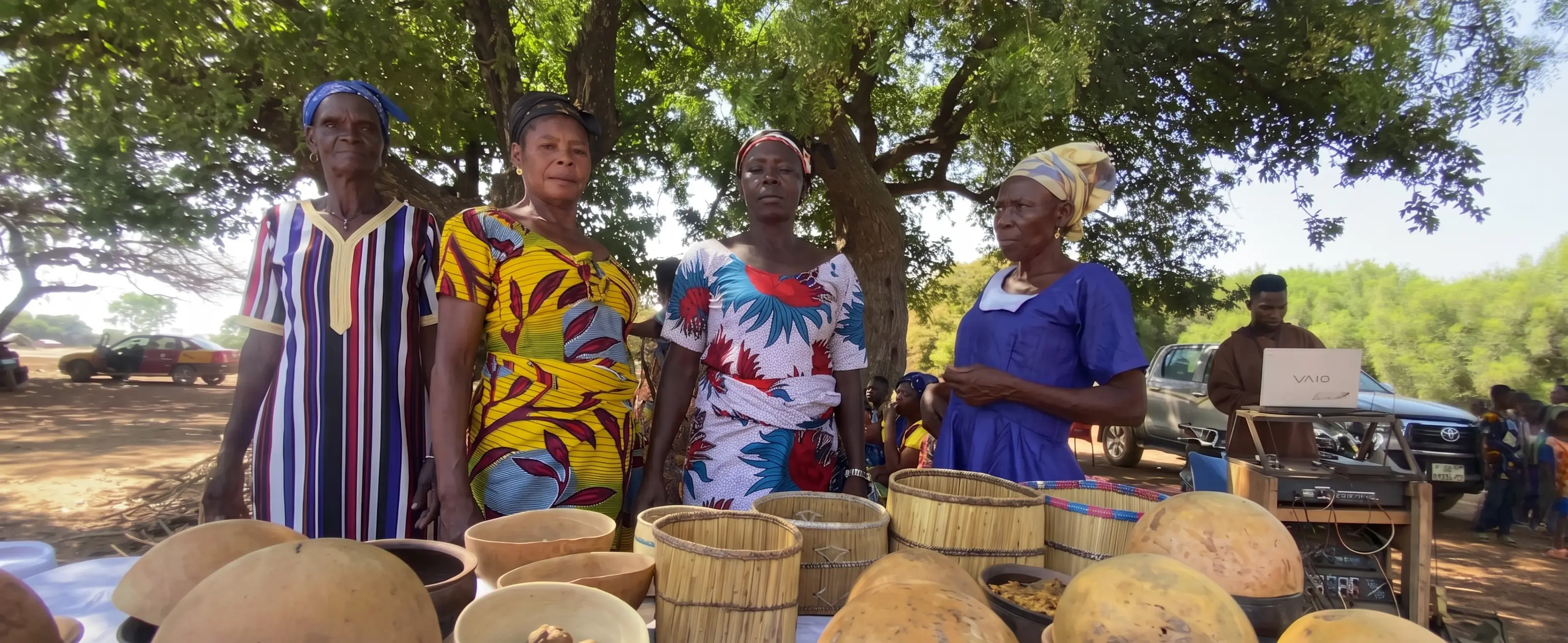
You often describe ancestral wisdom as a form of technology. How can we encourage global audiences to better value these indigenous forms of knowledge alongside scientific data?
To value ancestral wisdom, we first have to redefine what we mean by 'data'. In my agriculture studies, I was taught that data comes from controlled experiments over three or four seasons. But the Tanchara women are working with a thousand-year dataset. Their seeds are the physical manifestation of ten centuries of trial, error, adaptation, and success. That is not just 'tradition'; it is a highly refined, time-tested technology. To encourage a global audience to value this, we need to change how we present the narrative.
We must stop treating indigenous knowledge as 'folklore' and start recognizing it as applied science. When these women select seeds based on the texture of the soil or the timing of the rains, they are performing complex environmental analysis. We need to show that their 'low-tech' solutions often solve 'high-tech' problems, like climate volatility and soil degradation, more effectively than synthetic interventions. My work shows that these indigenous 'technologies' produce healthy food, stable communities, and zero-carbon footprints. When we show that these systems work without the debt and environmental destruction of industrial farming the value becomes undeniable.
Furthermore, we should promote 'knowledge fusion'. It should not be a competition between ancestral wisdom and modern science. We need to encourage a fusion where modern tools (like the photography I use or the organizational support of CIKOD) are used to amplify and protect traditional systems rather than replace them.
By documenting these systems through a professional lens, I am inviting the world to look at a mud-walled seed bank or a hand-woven basket and see a masterpiece of engineering. If we can shift the global gaze to see the intelligence in the tradition, we can begin to build a future that is both technologically informed and ancestrally grounded.
What is the most important lesson Tanchara offers to policymakers and practitioners currently seeking agroecological solutions to climate change? How can the resilience shown by these communities help bridge the gap between high-level policy and ground-level indigenous wisdom?
The most vital lesson Tanchara offers is that resilience cannot be imported; it must be cultivated from within. For policymakers and practitioners, Tanchara proves that true climate adaptation is not found in expensive, high-energy infrastructure, but in the sovereignty of the seed. When a community owns its genetic heritage, it possesses a decentralized, low-carbon, and zero-cost insurance policy against climate shocks. The most effective agroecological solution is simply to protect the existing systems that already work.
After over a decade of documenting stories, how do you see photography shaping the global conversation around food systems and sustainability?
After over fourteen years of documenting these narratives, I see photography as the most potent tool for collapsing the distance between high-level theory and lived reality. While policy papers and scientific data provide the "what," photography provides the "who" and the "how," transforming abstract concepts like sustainability into tangible, human stories. Ultimately, a single image can act as a catalyst for a global conversation, shifting the focus from corporate-led development to community-led sovereignty and showing that the future of our food systems is already written in the hands of the people who have guarded the earth for a thousand years.
Finally, having joined the Agroecology TPP Community of Practice, what are you looking forward to learn from your fellow members? How do you hope this platform will help amplify the stories and causes you are passionate about?
As a new member of the Agroecology TPP Community of Practice, I am eager to learn how other regions are successfully integrating indigenous knowledge into modern policy frameworks. I look forward to exchanging cross-cultural strategies that can strengthen our collective resistance against seed colonization.I hope this platform acts as a global megaphone for the stories of communities like Tanchara and Pavuu, moving their ancestral wisdom from the periphery to the center of the global agricultural discourse. By connecting with this diverse body of experts, I aim to use my photography to provide the visual evidence needed to validate agroecological solutions, ensuring that the self-sufficiency and resilience of indigenous farmers are recognized as the primary blueprints for a sustainable global food system.
Connect with Gbankulso Amir Abdallah Aidas:
🔗 LinkedIn: Amir Gbankulso
Do you want to share your story? Contact [email protected] to indicate your interest and discuss how your journey could be featured in an upcoming edition.