

Stories from our CoP: Roger Pholo Mvumbi-ENGLISH
Our latest edition of Stories from our CoP features Roger Pholo Mvumbi, an environmental journalist, human rights defender, and climate justice activist. In this interview, he shares his journey and practical lessons from advancing agroecology in the Democratic Republic of Congo, highlighting the importance of empowering farmers and local communities to build resilient food systems
Q&A

Hi Roger, could you tell us a little bit about yourself and what you do?
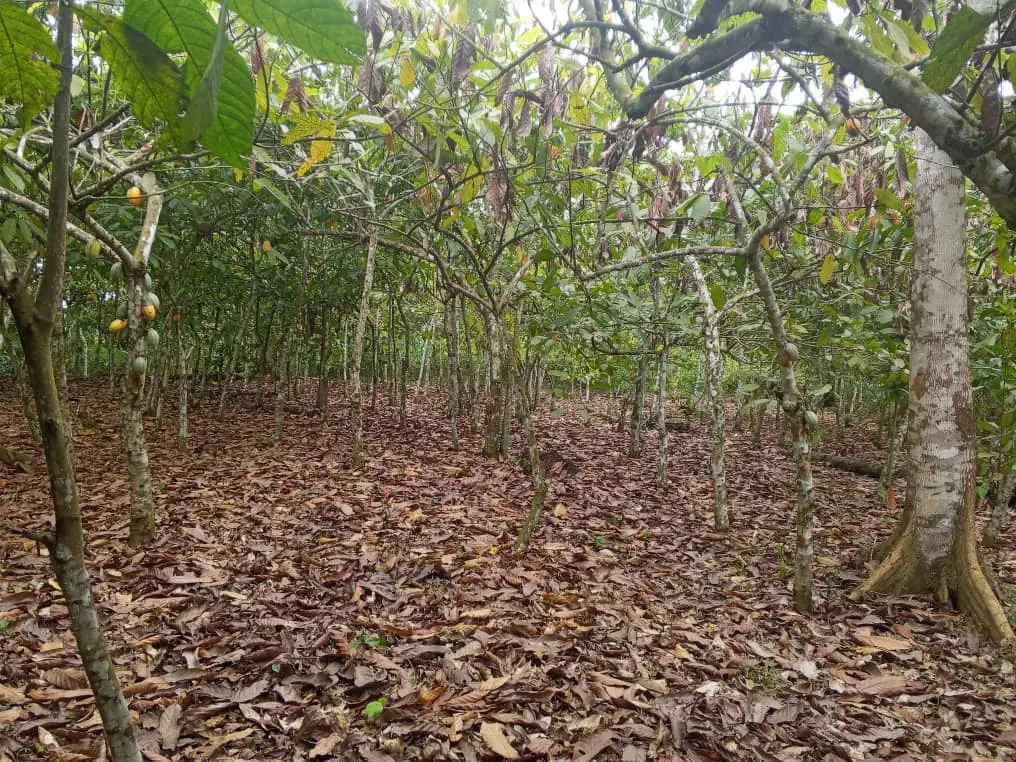
I am Pholo Mvumbi Roger — an environmental journalist, human rights defender, and climate justice activist. I am also a committed farmer, cultivating 10 hectares of cocoa, three hectares of pineapple, six hectares of palm trees, seven hectares of bananas, and more.
I serve as the Chair of the Board of Directors of a farmers' association that is a member of the platform Acting for Food Security and Sovereignty (ASSA), as well as the Association for the Integrated Rural Development of Nganda Tsundi (ADERIGAS). I am the National Executive Secretary of ASSA, CEO of Agri-Bio Mayombe (AGRIBIOMA), an Access Agriculture Ambassador, and the Founder of the Mayombe Agricultural Cooperative Society (COAGRIM). I am also involved in several other development organizations, in which I serve as both a member and advisor.
I hold a degree in Development Sciences and Techniques, specializing in Project Management and Administration, a certificate in Journalism, and a degree in Theology, along with several other qualifications. In addition, I serve as the Administrative and Financial Secretary of the DRC chapter of the Coalition for Agroecology (CAE-RDC).
We are eager to learn more about the work you are doing in the Democratic Republic of Congo (DRC). Could you tell us about your organization AGRI-BIO MAYOMBE? Its main programs and objectives?
AGRI-BIO MAYOMBE (AGRIBIOMA) is a newly established small and medium-sized enterprise operating as a limited liability company. Its mission is to promote organic farming and agroecology, and to support agripreneurs and farmers in adopting these approaches.
The company was also created to transform products from these new farming methods, to make them competitive in today’s market. We operate within a circular economy, processing waste, particularly organic waste into biochar through composting, with the goal of producing organic fertilizers and reducing reliance on chemical fertilizers.
Through AGRIBIOMA, we aim to access loans, as these have become increasingly difficult for NGOs to obtain, if not non-existent outside of subsidies. We want to generate profit from our activities in order to finance the ASSA mega-platform, which brings together individuals, farmers’ associations, agricultural cooperatives, SMEs, and networks advocating for food security and sovereignty. Our shared vision is to build a Congolese society free from hunger, malnutrition, and food dependency.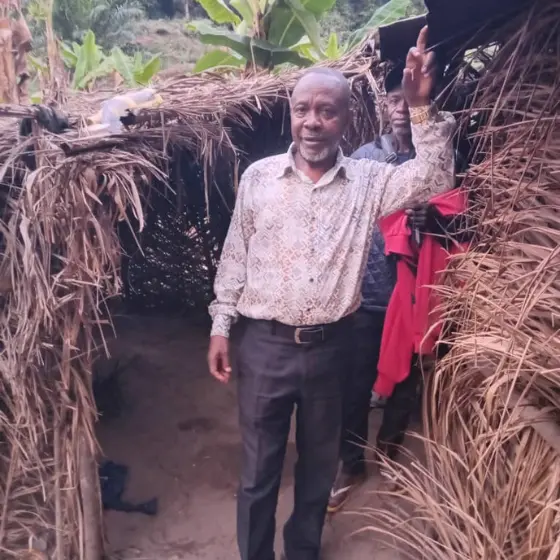
In your opinion, what are the key challenges affecting food security and sovereignty in the Democratic Republic of Congo?
I will try to answer this question as follows:
The DRC, with over 80 million hectares of arable land, still struggles to ensure food security for its population. Currently, over 80% of food is imported, and Reuters (2025), citing the United Nations, reports that over 28 million people suffer from acute hunger in the DRC.This is due to:
- Lack of political will
- Absence of agricultural policies; or, if they do exist, their implementation remains limited
- Insufficient support for family farming
- Limited availability of suitable seeds
- Lack of agricultural mechanization
- Low budget allocations to agriculture. In previous years, according to a 2019 evaluation by the International Fund for Agricultural Development (IFAD), agriculture represented only 3% of the national budget, contrary to the Maputo Agreement target of 10%. However, in 2025, the allocation rose to 13%, but its disbursement is still a challenge
- Poor support for agricultural producers. Structures such as the Agricultural Extension Service and the National Seed Service receive no support whatsoever
- Lack of funding for large-scale agricultural projects, due to the lack of agricultural credit for producers and other support structures
- An absence of banks and agricultural credit institutions
- Lack of subsidies for agriculture.
These challenges led to the creation of ASSA to address these pressing issues in the DRC.
Article 47 of the national Constitution recognizes that the State must guarantee the right to health and food security. However, the agri-food policies based on the recommended agro-industry do not place the food needs of the population at the center of their actions, let alone small-scale farming.
According to the World Food Programme (WFP, 2025), approximately 43% of children under the age of five, or one in two children, suffer from chronic malnutrition (stunted growth).[1] Other local sources report that six out of 26 provinces have malnutrition rates exceeding 50% (the emergency threshold), and 14 of these 26 provinces have more than 40% of children suffering from malnutrition.
Despite the fact that the Constitution of the DRC, as well as international conventions, require the Congolese state to take the necessary measures to guarantee food security and good health for its people, there are still no legislative provisions recognizing the right to food for every Congolese citizen as a human right.
This situation must be addressed by engaging all stakeholders concerned with the well-being of the Congolese population, raising awareness, and by identifying appropriate measures to progressively achieve food security for all. The goal is to steadily reduce the number of people suffering from hunger and malnutrition and improve the population’s health over time.
As an environmental journalist, what role do you think the media and raising public awareness play in advancing agroecology and food security in the DRC?
The media play a pioneering role; without them, nothing can be done. This fourth estate must be brought to the forefront in order to enlighten politicians and encourage them to adopt a clear stance by keeping them informed about the danger posed by climate change, so that they adopt good agricultural policies to produce healthy food for the population.
There can be no national sovereignty without food sovereignty, and this requires methods such as agroecology, which highlights all aspects such as the protection of the environment, biodiversity, and human health. In short, good health for all living beings.
The media therefore have a major role to play as whistleblowers to the general public, i.e., from the top down and from the bottom up.
As a journalist and community leader, what inspired you to become involved in activism, and what causes are closest to your heart today?
As a journalist passionate about environmental causes and climate justice, I am driven by the suffering of my fellow citizens and people all over the world amidst the climate crisis, hunger, and other natural disasters. I feel compelled to speak out, despite the hardships of working in a profession dedicated to informing others—especially in a world that often rejects the truth, even though it is what ultimately sets us free. Writing and speaking out is not only a responsibility but also a right guaranteed by law.
As a community leader, I come from a family of farmers, and it was through agricultural products that I was able to pursue my studies. Farming, for me, is both a way of giving back and a means of independence. I am a farmer, and as our motto says: “No countries without farmers.” Motivated by the essential role farming plays, I am committed to being the voice of farmers at all levels and on every occasion that presents itself.
Being a member of the Agroecology TPP Community of Practice – what do you think is the added value of joining our community?
They say that unity is strength, and that for the fire to burn brightly, everyone must contribute their piece of wood. By joining this community, I intend to build new relationships, acquaintances, partnerships, and have training opportunities. I will undoubtedly be strengthened in my abilities and become an expert in agroecology to serve my community, my country, and the world.
In November last year, you expressed interest in creating a community of practice with the aim of training farmers in your region in new agroecological techniques in order to establish an agroecology center in your region. Could you tell us how this initiative has progressed since then and how the AE-TPP Community of Practice platform can support your goals?
Yes, it is going very well, with cocoa plantations under regular monitoring. At least 2,500 farmers have been reached through awareness campaigns broadcast on community radio stations in the local Kikongo (Yombe) language. Additionally, 500 women pineapple farmers have been engaged, and banana growers, other subsistence and perennial crop farmers, have also been included.
In the first phase, our goal is to reach 20,000 farmers in the Mayombe region of Kongo Central Province, where we plan to establish our center. The awareness-raising efforts are being carried out with the support of the AGRITECH MOLONI project—Moloni meaning “farmer” which involves training 10 young people, equipping them with smartphones to help identify farmers and connect them with potential markets.
As for the support we need from you, we can list it as follows:
- Technical support. We need transportation such as motorcycles, and a 4x4 jeep to coordinate activities in the field, equipment to process perishable products, and, if needed, a large vehicle to transport and sell these products)
- Capacity building for the coordination team to better understand the situation;
- Financial support to carry out activities effectively, but also, and above all, to set up the center that will welcome students and other researchers, as sites have been identified for this worthy cause.
We would also like to hear how you can help us move forward with this project, which is very important to us.
At the moment, we are unable to provide financial support. However, we can work on exploring a partnership and are happy to discuss how we can use the AeTPP CoP platform to help amplify the important work you are doing in the DRC. We see that you’re already registered on our One Million Voices Platform and are delighted to have you showcase more about your work and practices, and we encourage everyone to join and connect.
Thank you for taking the time to participate in this interview, and for your openness in sharing your story with us.
Yes, I am already registered on the platform. Your support and partnership will be greatly appreciated for our worthy cause. Thank you once again for your trust in us.
Connect with Roger Pholo Mvumbi:
🔗Social Media: LinkedIn
🔗One Million Voices Platform: Profile
🔗Global Forum on Food Security and Nutrition (FSN Forum): Profile
Join the Agroecology TPP CoP
1. Create an account with our COMMUNITIES PLATFORM
2. Confirm your email address in the registration process
3. Once inside the COMMUNITIES platform, navigate to ‘Groups’ and choose
The Transformative Partnership Platform on Agroecology
4. Select Join and start interacting with other agroecology enthusiasts!