
Stories from our CoP: Naomi Muriuki
In this edition of Stories from our Community of Practice, we spotlight Dr. Naomi Muriuki, County Agroecology Coordinator in the Nakuru County Government. With over 16 years of experience spanning agricultural extension, farmer training, research and community development. Naomi has been instrumental in advancing agroecology in Nakuru, including through her contribution to the development and approval of the Nakuru County Agroecology Policy. In this story, she reflects on Nakuru’s agroecology journey, the power of collaboration, and the opportunities and lessons emerging as the county moves from policy to implementation.
To begin, could you tell us a little bit about yourself, your professional journey, and your current role within the Nakuru County Government? What inspired you to dedicate your career to advancing agroecology?
I am Dr. Naomi Muriuki, an agricultural and community development professional with a PhD in Community Studies and Extension, an MSc in Agricultural and Rural Development, and a BSc in Agriculture and Human Ecology Extension. I currently serve as the County Agroecology Coordinator in the Nakuru County Government, where I coordinate the county’s agroecology agenda and collaborate with diverse stakeholders to advance the transition towards sustainable, resilient, and inclusive food systems.
My professional journey spans more than 16 years and has taken me through national and county governments, agricultural training institutions, and universities. I began my career with the Ministry of Agriculture, working in agricultural extension and home economics, with responsibilities that included gender mainstreaming, nutrition, value addition, youth in agriculture, home gardening, and appropriate technologies. These experiences exposed me to the realities of farming households and taught me that agricultural development must respond to the needs of the whole household—not only production, but also nutrition, livelihoods, gender, and the environment.I later served at the Nakuru Agricultural Training Centre as Deputy Principal and Head of Training, where I coordinated training and demonstrations for farmers and stakeholders in areas including agrinutrition, value addition, food safety, farm planning and management, gender mainstreaming, appropriate technologies, and urban and peri-urban agriculture.
My experience in academia has also shaped my approach. I have taught at Egerton University, Mount Kenya University, and Laikipia University, covering areas such as extension methods, community outreach, project planning and management, farm management, agricultural economics, dryland agriculture, and indigenous fruits and vegetables. My research has focused particularly on agricultural extension communication and technology adoption among smallholder farmers in Nakuru County.
My subsequent work in environmental and land development, as well as my role as a climate change champion, further broadened my perspective to encompass climate change, soil and water management, land use, environmental management, and sustainable resource use. Looking back, I see agroecology as a natural convergence of all these experiences. Working with farmers taught me the importance of practical solutions; community development taught me the value of participation and local knowledge; nutrition work showed me the connection between agriculture and healthy diets; gender work highlighted the importance of inclusion; and environmental and climate work demonstrated the need to protect the ecosystems that sustain agriculture.
This is what inspired me to dedicate myself to agroecology. I believe that the future of agriculture lies in approaches that are productive while also restoring soils, protecting biodiversity, strengthening livelihoods, improving nutrition, and building resilience to climate change.Leading the technical working process that contributed to the development and approval of the Nakuru County Agroecology Policy has been an important milestone in this journey. It has given me an opportunity to bring together many strands of my professional experience, extension, training, research, community engagement, gender, nutrition, environmental management, and policy, to contribute to a longer-term vision for resilient food systems in Nakuru County.
For members of our global Agroecology TPP Community of Practice, could you tell us about the county, its agricultural landscape, the communities it serves, and why it is an important region for advancing agroecology in Kenya?
Nakuru County is one of Kenya’s important agricultural counties, with a highly diverse agricultural landscape and communities whose livelihoods are strongly connected to agriculture and natural resources. We have smallholder farmers, livestock keepers, horticultural producers, and mixed farming systems across different agroecological zones. Areas such as Molo, Njoro, Rongai, Subukia, Bahati, Gilgil, and Naivasha demonstrate the diversity of our production systems.Nakuru is also an ecologically important county.
The Lake Naivasha Basin, for example, supports agriculture, horticulture, biodiversity, tourism, water resources, and other economic activities. This creates both opportunities and responsibilities, as agricultural production must coexist with the protection of natural resources and ecosystems.At the same time, farmers are facing increasing challenges from climate variability, soil degradation, biodiversity loss, water pressures, rising input costs, and changing markets.
These pressures make resilience an urgent priority. My experience working directly with farmers across different settings has shown me that Nakuru already has a wealth of local innovation and knowledge. Farmers are experimenting with soil health practices, diversification, indigenous crops, resource conservation, appropriate technologies, and other approaches that contribute to resilience.This makes Nakuru an important place for advancing agroecology not simply as a demonstration site, but as a county where we can explore how agroecology can be embedded in extension, research, markets, nutrition, environmental management, county planning, and investment.
Nakuru County recently launched its Agroecology Policy, becoming one of the pioneering counties in Kenya to institutionalize agroecology through policy. What inspired the County to embark on this journey, and what challenges or opportunities made such a policy necessary?
Our agroecology journey was triggered by both national policy direction and the realities we were experiencing at the county level. The Kenya National Agroecology Strategy 2023–2033 provided an important national framework and encouraged counties to develop context-specific approaches for implementing agroecology. For Nakuru, this came at a time when we were already seeing the effects of climate change, land degradation, biodiversity loss, food safety concerns, and heavy reliance on agrochemicals.
However, the trigger was not environmental concerns alone. As someone who has worked extensively in agrinutrition and agricultural extension, I have seen how closely food production is connected to nutrition and household wellbeing. Nakuru continues to face challenges such as stunting, wasting, underweight, and maternal anaemia. This reinforced the need to think about food systems not simply how much we produce, but what we produce, how we produce it, and whether our food systems are delivering nutritious food sustainably.
Agriculture is also central to livelihoods in Nakuru. We therefore needed approaches that could help farmers remain productive while reducing their vulnerability to climate and environmental pressures.There was also strong interest and support from county leadership, farmers, civil society organizations, and development partners. The growing national and global momentum around agroecology and regenerative agriculture created an opportunity for Nakuru to build on existing initiatives and bring them together within a common county framework.The policy was therefore a response to a convergence of challenges and opportunities: the need to protect our natural resource base, improve food and nutrition outcomes, strengthen farmer livelihoods, and build climate-resilient food systems.
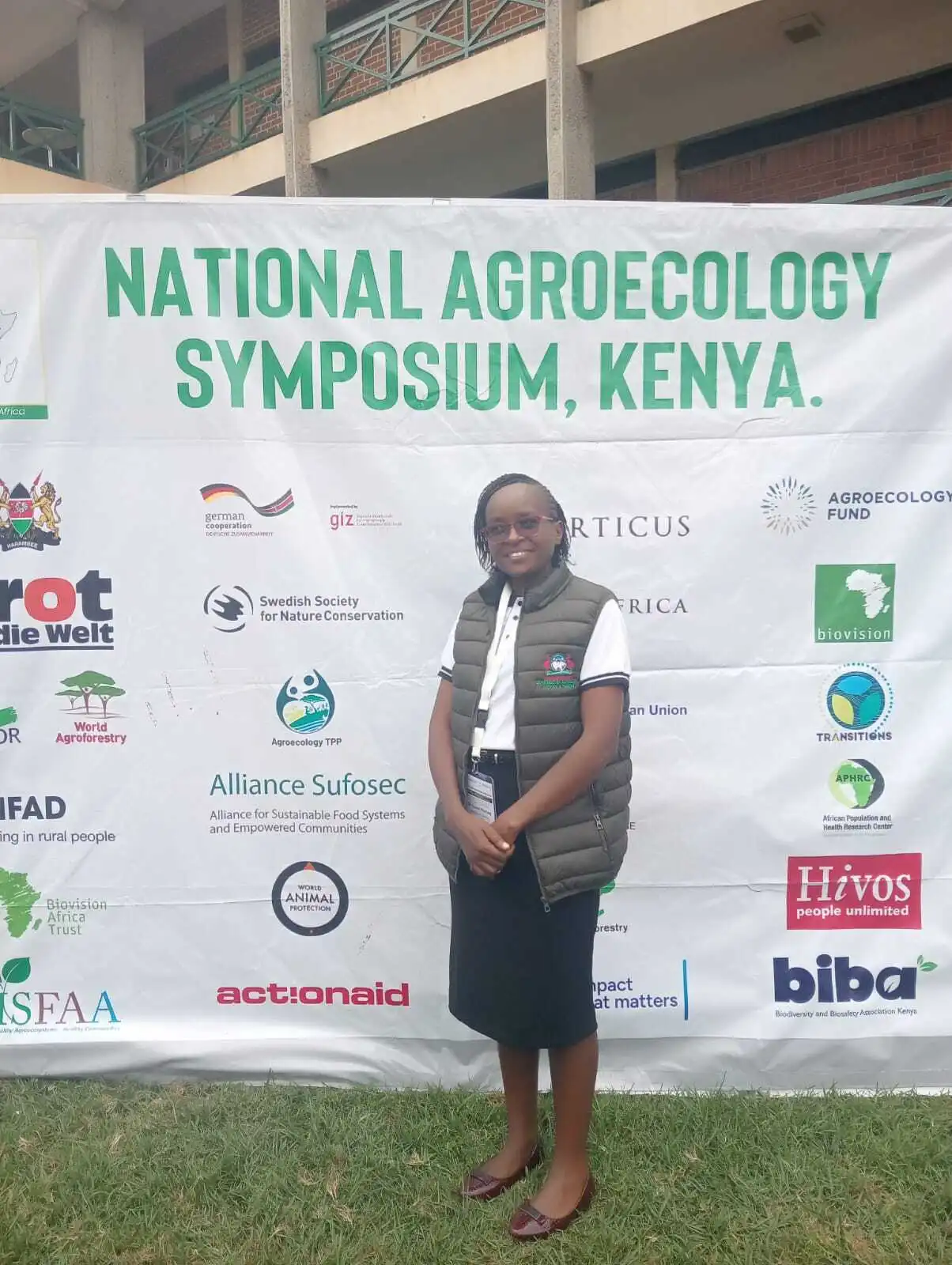
Dr. Naomi Muriuki during the recent Kenya National Agroecology Symposium.
Developing a policy is a complex process involving many actors. Could you walk us through the journey from the initial idea to the official launch, and highlight some of the key milestones along the way?
The journey has been one of collaboration, learning, and gradual institutional development. One of the important starting points was the recognition that Nakuru already had many actors promoting different aspects of sustainable agriculture, but there was a need for greater coordination and a common policy direction.As part of the technical process, I had the opportunity to lead the technical working group that supported the development and eventual approval of the Nakuru County Agroecology Policy. We adopted a participatory approach, bringing together government actors, farmers, civil society organizations, researchers, and development partners.We also recognized early on that technical work alone would not be enough. Political engagement was important for building ownership and ensuring that agroecology could become part of the county’s long-term development agenda.The Nakuru County Agroecology Policy was launched in 2025, marking a major milestone. However, we understood that the policy launch was only the beginning.
The next step was to establish the governance and coordination mechanisms needed for implementation. We established the Multi-Stakeholder Platform (MSP), the County Technical Agroecology Committee (CTAC), and six thematic working groups.We also strengthened coordination through CASSCOM—the County Agriculture Sector Stakeholder Coordination and Advisory Committee—so that agroecology could be connected with the wider agricultural sector.
Another important part of our approach was learning from other counties and implementers. We looked at experiences from elsewhere and considered what could be adapted to Nakuru’s context.We now have an Agroecology Implementation, Monitoring, Evaluation and Learning (IMEL) Framework and stakeholder mapping, which were launched on 7 August 2026.For me, this is one of the most exciting stages of the journey because we have now moved from policy formulation to implementation and institutional strengthening.
Collaboration was clearly at the heart of this process. How did the County engage farmers, researchers, civil society organizations, development partners, and government institutions in shaping the policy? What role did these partnerships play in ensuring that the policy reflected local priorities while aligning with national and global agroecology goals?
The policy would not have been possible through the efforts of the County Government alone. Collaboration between the County Government and civil society organizations was particularly important in bringing the policy process to life. Different partners contributed diverse strengths, knowledge, and experiences.
Farmers contributed practical knowledge and experiences from their production systems. Researchers and universities provided scientific evidence and opportunities for innovation. Civil society organizations brought experience in community mobilization, farmer engagement, and implementation, while development partners contributed technical expertise, resources, and experience from other contexts.
Within government, we worked to ensure that agroecology was not treated as the responsibility of a single department. The establishment of the MSP, CTAC, and six thematic working groups created spaces for different actors to participate according to their expertise. CASSCOM has also provided an important opportunity to connect agroecology with the broader agricultural development agenda.
We deliberately combined participatory engagement with political engagement. We needed the voices of farmers and practitioners, but we also needed county leadership to understand why agroecology matters and support its institutionalization.We also learned from other counties and implementers. This was valuable because we did not have to reinvent everything. We could examine what others had tried, identify lessons, and adapt them to Nakuru.The result is a policy that is locally grounded while also responding to Kenya’s National Agroecology Strategy and the broader global movement towards agroecological transformation.
Every transformative journey comes with challenges. What were some of the obstacles you encountered during the policy development process, and what lessons did they offer for other counties, regions, or countries embarking on similar policy journeys?
One of our major challenges has been insufficient financial resources to adequately support coordination and implementation activities. Effective coordination requires resources for stakeholder engagement, meetings, field activities, capacity building, monitoring, evidence generation, and learning.Another challenge has been bringing together actors with different mandates and perspectives. Agroecology cuts across agriculture, environment, climate change, nutrition, research, markets, and livelihoods, so coordination can be complex.
We have also had to continuously build a common understanding of what agroecology means. It is much broader than simply changing agricultural inputs; it requires looking at the entire food system and the relationships between farmers, consumers, natural resources, markets, institutions, and knowledge.These challenges have taught us the importance of strong governance structures. The establishment of the MSP, CTAC, and thematic working groups, together with strengthened engagement through CASSCOM, has helped create platforms for coordination.
We have also learned that political commitment is essential. Technical teams can develop a policy, but institutionalization requires leadership support and ownership across government.Most importantly, I have learned that agroecology policy development should be viewed as a journey rather than a one-time event. It requires patience, dialogue, learning, and continuous adaptation.
Inclusive food systems are central to agroecological transitions. How does the Nakuru County Agroecology Policy ensure the meaningful inclusion of women, youth, persons with disabilities, and Indigenous and local knowledge holders in both its implementation and long-term vision?
Inclusion is fundamental to agroecology because food systems are ultimately about people. My professional background has strongly influenced how I view this issue. Throughout my career, I have worked on gender mainstreaming, nutrition, youth in agriculture, home gardening, and appropriate technologies. These experiences have taught me that agricultural interventions can only succeed when they recognise the different roles, needs, and capacities of people within farming households and communities.
Women are particularly important actors in Nakuru’s food systems. Youth, meanwhile, bring enormous potential for innovation, technology, and entrepreneurship. Persons with disabilities also need to be deliberately considered in how extension services, training, and opportunities are designed and delivered.The policy recognises the importance of the meaningful participation of these groups in planning, implementation, monitoring, and decision-making. We also place strong emphasis on local and Indigenous knowledge, recognising farmers as important holders of knowledge about seeds, soils, biodiversity, food, and local ecosystems.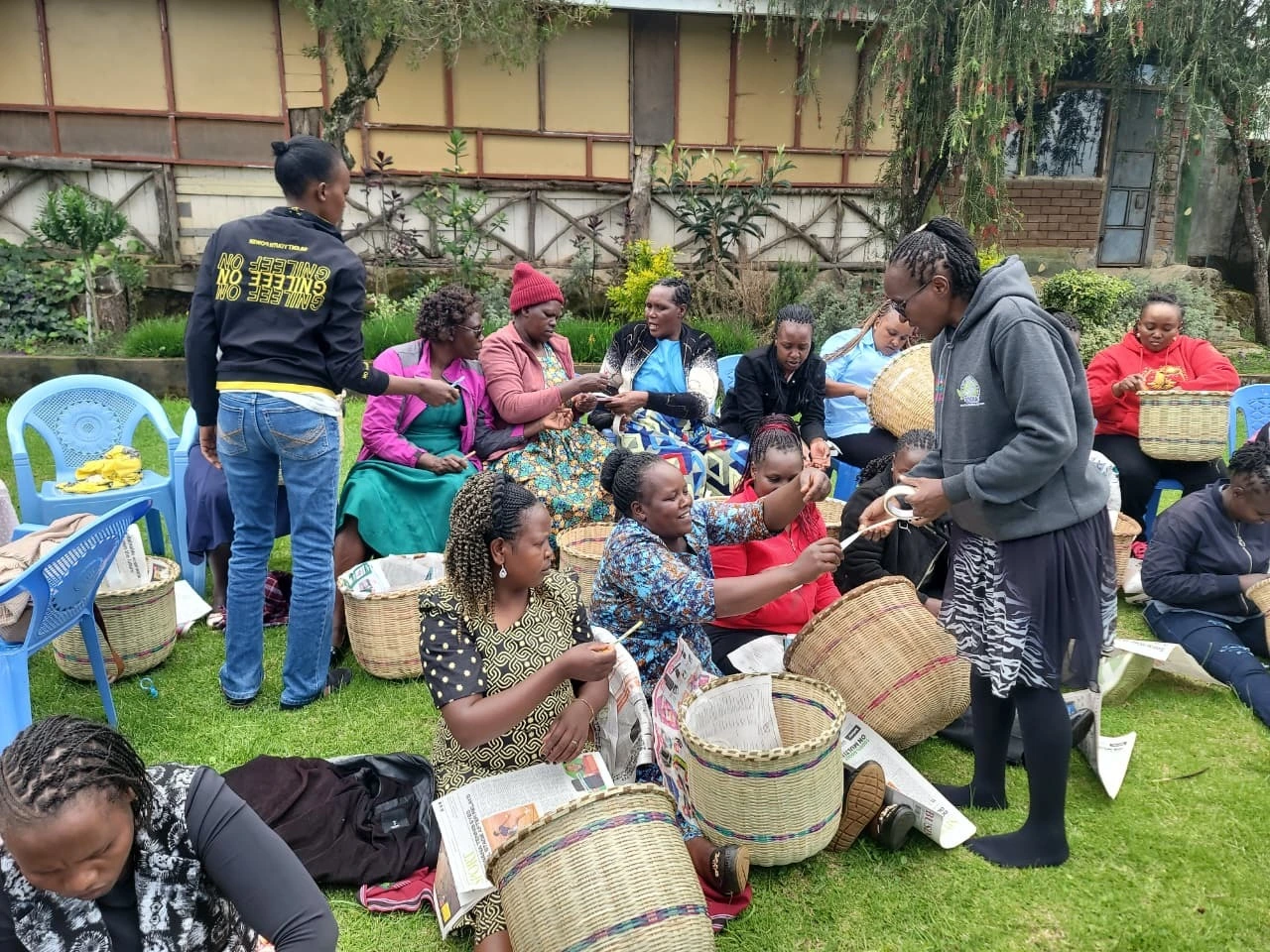
As we move into implementation, we want to strengthen the documentation and mapping of agroecological innovations and enterprises, while creating more opportunities for women and youth to participate as innovators, entrepreneurs, leaders, and decision-makers.
As we commemorate the International Year of the Woman Farmer, this observance shines a spotlight on the indispensable contributions of women farmers while calling for greater investment and action to address the barriers they continue to face. From your perspective, how are women farmers shaping agroecological transformation in Nakuru County, and how does the County’s Agroecology Policy seek to empower them and advance gender equality in agrifood systems?
Women are already at the heart of food production and are important drivers of agroecological transformation in Nakuru County. Through my work in agricultural extension, agrinutrition, gender mainstreaming, community development and appropriate technologies, I have seen first-hand the significant role women play in food production, household nutrition, seed management, natural resource management, processing, marketing and enterprise development.
The Nakuru County Agroecology Policy recognizes that women cannot remain at the implementation end of agricultural programmes while decisions about priorities and resources are made elsewhere. It therefore places emphasis on the meaningful inclusion of women and other marginalized groups in decision-making, planning, implementation, monitoring and evaluation of agroecology initiatives.
Importantly, inclusion also extends to resource allocation. We want women’s priorities and needs to be reflected when agroecological programmes are planned, budgeted for and implemented. This means creating opportunities for women to influence what is prioritized, how resources are allocated and how interventions are designed and evaluated.
The policy also provides a basis for strengthening women’s access to extension services, knowledge, technologies, markets, enterprise opportunities and other resources necessary for their participation in agroecological value chains. We are particularly interested in ensuring that women are not viewed only as beneficiaries, but as decision-makers, innovators, entrepreneurs, knowledge holders and leaders within the food system.This approach is important because agroecology is about transforming systems, and systems cannot be transformed while excluding a significant proportion of the people who produce, process and manage food.
As we mark the International Year of the Woman Farmer, therefore, I believe the conversation should go beyond celebrating women farmers. We need to create institutional mechanisms that give women a meaningful voice in decision-making and resource allocation, while investing in their knowledge, enterprises and leadership. For Nakuru, gender inclusion is not an additional component of agroecology; it is part of the foundation for achieving a resilient, equitable and sustainable food system.
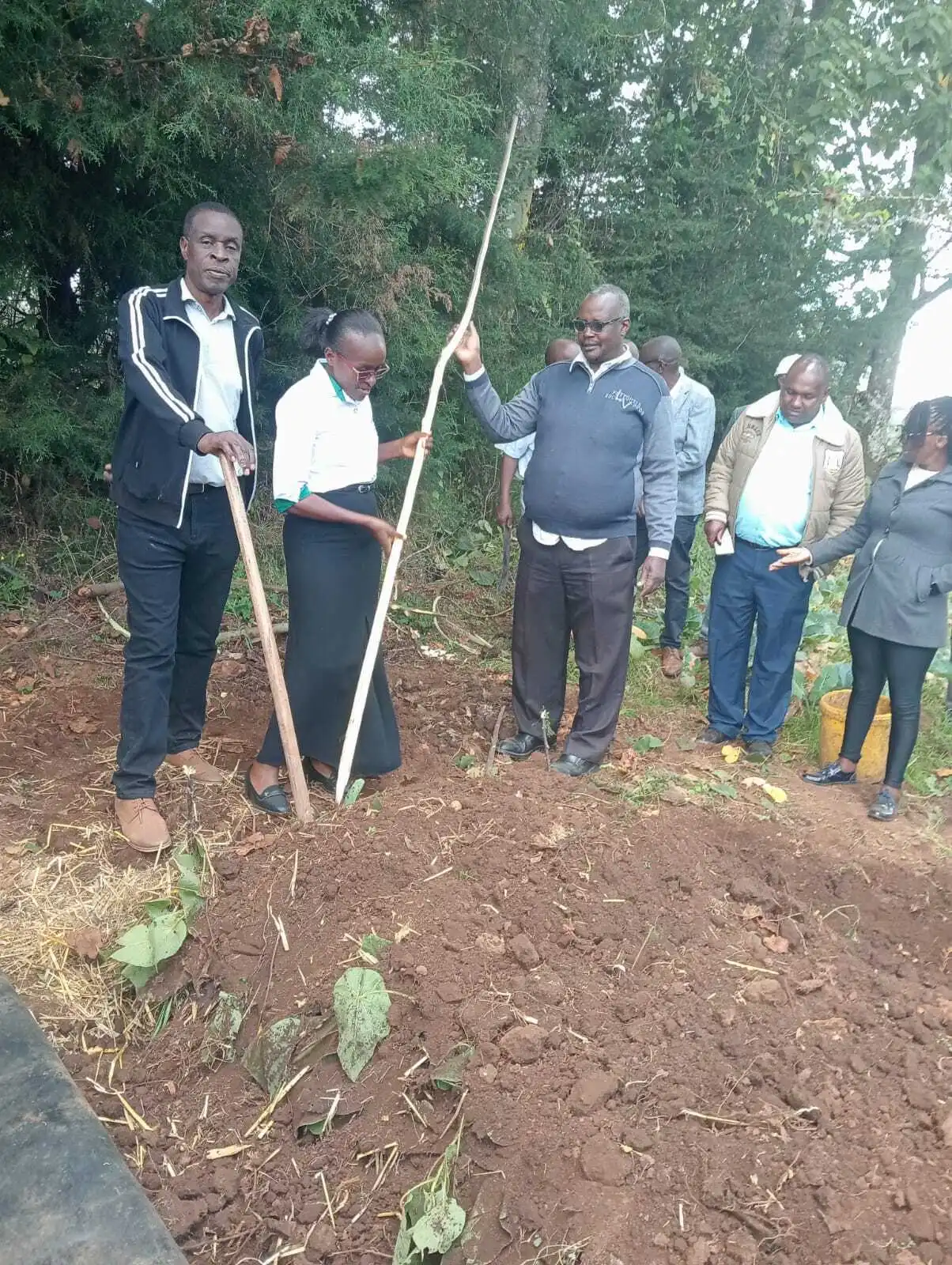
The launch of a policy is only the beginning. What are Nakuru County’s priorities for implementation, and what impact do you hope the policy will have on farmers’ livelihoods, food systems, biodiversity, and climate resilience in the coming years?
Our immediate priority is to move from policy commitment to implementation and institutional strengthening. The completion of the Implementation, Monitoring, Evaluation and Learning Framework and stakeholder mapping provides an important foundation for this work.One key priority is to strengthen existing governance structures, particularly CASSCOM and the MSP, while ensuring that CTAC and the six thematic working groups remain active, coordinated, and effective.
We also want to scale up and institutionalise agroecology across county systems so that it becomes integrated into mainstream agricultural planning, extension services, budgeting, and research and development programmes.Another area we are exploring is the integration of agroecology into school meals programmes. This presents an opportunity to connect sustainable agricultural production with nutrition, while helping young people understand where their food comes from and how more sustainable food systems can be built.
We also want to strengthen the capacity of both farmers and extension officers through training, demonstrations, farmer-to-farmer learning, and practical extension materials.Evidence generation will be another priority. We need better data on where agroecological innovations are taking place, who is implementing them, what enterprises are emerging, and what results are being achieved. This is why stakeholder and innovation mapping is so important.
We also want to increase the inclusion of women and youth in agroecology initiatives and create opportunities for them within emerging agroecological enterprises and value chains.Ultimately, I would like to see agroecology contribute to healthier soils, improved biodiversity, more resilient agricultural production, better nutrition, diversified livelihoods, reduced vulnerability to climate change, and improved economic opportunities for farmers.
Looking beyond Nakuru, what advice would you give to policymakers, practitioners, and governments around the world that are considering developing or strengthening agroecology policies? What lessons from your experience could be adapted to different contexts?
Our experience in Nakuru has taught us that successful agroecology policy is built on four things: strong political commitment, inclusive stakeholder engagement, effective governance structures, and sustainable implementation mechanisms.First, secure political commitment. Agroecology needs to be understood as a development priority rather than as a project belonging to one department or organisation. This creates the leadership support and institutional ownership needed to integrate agroecology across sectors and sustain action beyond individual projects or funding cycles.
Second, engage stakeholders from the beginning. Farmers, researchers, civil society, development partners, and government institutions should be involved in shaping the process from the outset. This creates ownership and helps ensure that the policy reflects real needs and priorities.Third, establish clear governance structures. In Nakuru, the MSP, CTAC, thematic working groups, and CASSCOM provide different platforms for coordination and collaboration. The specific structures may differ across contexts, but having clear mechanisms for coordination, participation, and accountability is essential.
Fourth, think about implementation while developing the policy. A policy without a clear implementation mechanism risks remaining a good document without translating into meaningful change. Monitoring, evaluation, and learning should therefore be built into the process from the beginning.Finally, learn from others. We benefited from examining experiences from other counties and agroecology practitioners and implementers.
Sharing experiences through communities of practice can help save time, avoid duplication, strengthen learning, and encourage innovation.My advice, therefore, is: do not wait for perfect conditions. Build partnerships, establish the necessary governance structures, start implementing, learn from experience, and continuously adapt and improve.
Finally, the AE-TPP Community of Practice brings together members from across the globe who are working to advance agroecological transitions. What message would you like to share with the global community, and how can we strengthen collaboration to accelerate the transformation of agrifood systems worldwide?
My message to the global agroecology community is that transforming our food systems is possible, but it cannot be achieved by one institution, one sector, or one country working alone.Nakuru’s journey has taught us the power of bringing together government, farmers, researchers, civil society, development partners, and communities around a shared vision. We have moved from recognising the importance of agroecology to developing a policy and, now, to building the systems required for implementation.
This experience reminds us that collaboration, knowledge sharing, and learning from one another are essential to sustaining the transition. Through stronger communities of practice, we can share evidence and innovations, learn from different contexts, avoid duplication, and adapt solutions to local realities. By connecting our experiences and working across sectors and borders, we can build momentum towards more sustainable, resilient, and inclusive agrifood systems worldwide.We should also recognize that many solutions already exist within communities. Farmers are innovating every day. Our role is to listen to them, document their innovations, connect their knowledge with scientific evidence and create the policy and investment environment that allows successful approaches to scale.
The Community of Practice is particularly valuable because it enables us to learn across borders. A solution developed by farmers in Nakuru may offer valuable lessons to communities elsewhere, just as Nakuru can learn from innovations emerging in other parts of Africa and around the world.I would encourage stronger collaboration in three key areas: sharing evidence and knowledge, strengthening policy–practice linkages, and investing in farmer-led innovation.
Policymakers need evidence from the field. Practitioners need supportive policies and resources. Researchers need opportunities to work alongside farmers, while farmers need systems that recognise and invest in their knowledge and innovation.Our journey in Nakuru is still unfolding. We launched the Agroecology Policy in 2025, and we are now moving into implementation and institutional strengthening. Our Implementation, Monitoring, Evaluation and Learning (MEL) Framework and stakeholder mapping were launched on 7 August 2026, providing an important foundation for this next phase.
For me, the most important lesson is that agroecological transformation is a journey of collective learning and action.If we connect policy, science, farmer knowledge, innovation, finance, markets, and strong local institutions, we can move agroecology from the margins into the mainstream and build food systems that are resilient, inclusive, nutritious, and sustainable for generations to come.Nakuru’s experience demonstrates that, with political commitment, inclusive engagement, good governance, and sustainable implementation mechanisms, agroecology can become more than a set of practices. It can become a pathway for transforming how we produce, consume, and sustain our food systems.
Connect with Naomi Muriuki on the AE-TPP Community of Practice:
Do you want to share your story? Contact [email protected] to indicate your interest and discuss how your journey could be featured in an upcoming edition.